
- Concrete costs less to install and is one solid slab. When it cracks, the repair usually shows.
- Pavers cost more up front, but sunken or broken sections can be lifted and reset with the same stones.
- Either one lasts only as long as the base under it: proper digging, compacted gravel and water sloped away from the house.
- A new curb cut needs DOB approval and a DOT permit. Any work on the public sidewalk needs a DOT permit too.
The short answer
Choose concrete if you want the lowest price and a simple, clean surface. Choose pavers if you want more style, and repairs that blend in years from now. On a typical New York City driveway, both will serve you well for many years if the base underneath is built right, and that matters more than which surface sits on top.
Concrete: pros and cons
- Lower cost. Fewer hours of labor and fewer materials than pavers for the same area.
- Simple to look after. One flat surface, easy to sweep and shovel.
- It will crack somewhere. Control joints decide where. Repairs mean cutting out a section, and new concrete rarely matches the old color.
- Less forgiving of a weak base. If the ground settles, the slab cracks instead of flexing.
Pavers: pros and cons
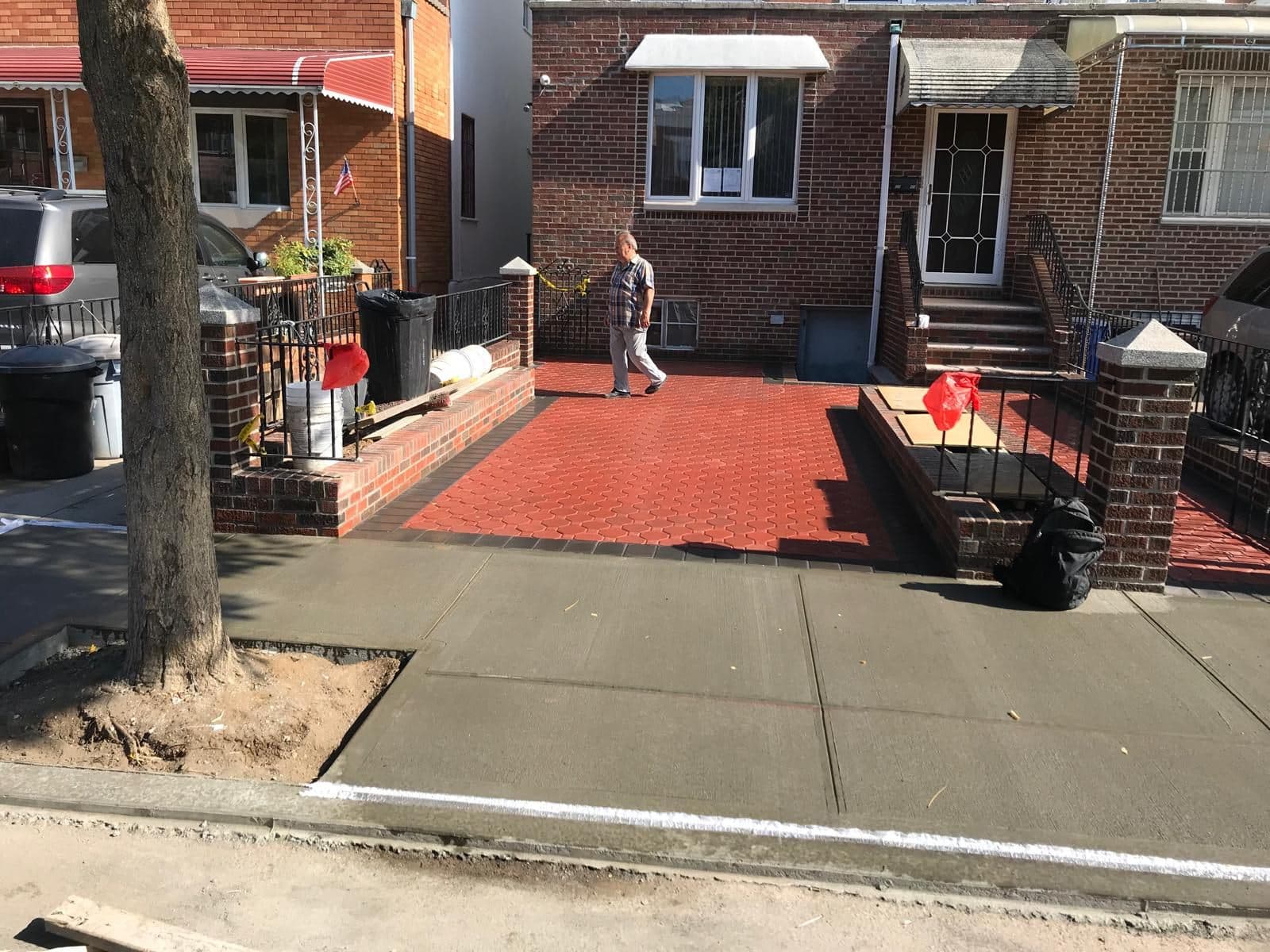
- More looks to choose from. Colors, shapes, borders and patterns, from classic red to grey and Jerusalem stone.
- Repairs blend in. Sunken or stained areas can be lifted, re-leveled and relaid with the same pavers.
- Higher up front. More labor: every paver is set, cut and edged by hand.
- Joints need care. The sand between pavers washes out over time. Power-washing and re-sanding every few years keeps weeds out and the surface tight.
What really decides how long it lasts: the base
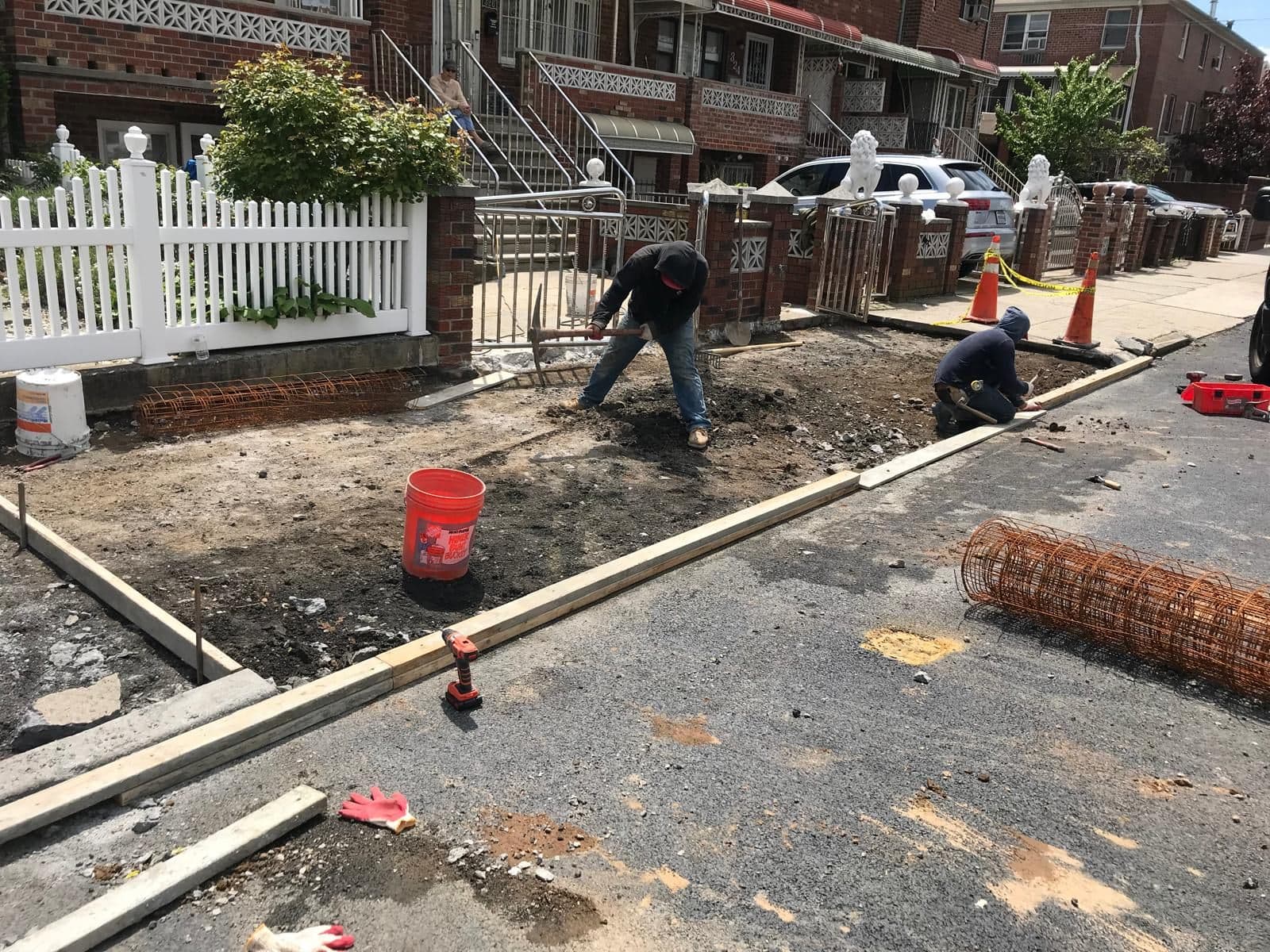
Most failed driveways we replace didn't fail on the surface. They failed underneath: not enough digging, a thin or loose base, or water running toward the house and sitting under the slab. Whatever you choose, ask your contractor how deep they'll excavate, what goes into the base and how it's compacted, which way the water will run, and how the edges will be held in place.
NYC winters are hard on both
Water that gets into cracks or joints freezes, expands and pushes the surface apart, and road salt speeds it up. Good drainage is the best protection. Go easy on rock salt, especially on new concrete, and shovel early so snow doesn't melt and refreeze in place.
Permits: curb cuts and the sidewalk
Replacing the surface of a driveway on your own property is a different job from changing how cars reach it. A new or widened curb cut needs Department of Buildings approval, filed by a licensed engineer or architect, and a permit from the Department of Transportation, and zoning limits where curb cuts can go and how wide they can be. Any work on the public sidewalk in front of your house needs a DOT permit as well. We check all of this at the free visit.
Which should you choose?
If budget comes first, concrete. If looks and easy repairs come first, pavers. Many of our Staten Island and Brooklyn clients mix the two: a paver driveway with a concrete sidewalk, or the reverse. See real examples on our Staten Island pavers & driveways page.
Already have pavers that look tired? Often they don't need replacing: power-washing, re-leveling and re-sanding can make them look close to new.
Common questions
Do pavers or concrete last longer?
Both last many years on a well-built base. Concrete is more likely to crack visibly; pavers are more likely to shift in spots, but those spots can be lifted and reset.
Are pavers more expensive than concrete?
Usually, yes, because every paver is set and cut by hand. The exact difference depends on the size, the paver you choose and how much old material has to come out.
Can pavers go over my old concrete driveway?
We usually don't recommend it for driveways. The old slab's cracks and drainage problems stay underneath. Taking it out and building a proper base lasts longer.
Do I need a permit for a new driveway in NYC?
A new or widened curb cut needs DOB approval and a DOT permit, and any work on the public sidewalk needs a DOT permit. We check what your job needs at the free visit.
Can sunken pavers be fixed?
Yes. We lift the sunken area, fix the base and relay the same pavers, then re-sand the joints.
This guide is general information, not legal advice. Rules can change; check NYC DOB and DOT for the latest.