
- Property owners are responsible for the sidewalk next to their property.
- Fix it within 75 days of the notice, or DOT may do the repair and bill you.
- Work over $200 needs a DCWP-licensed contractor with a DOT sidewalk permit.
- The violation is only removed after a DOT dismissal inspection.
Who is responsible for the sidewalk?
In New York City, property owners are responsible for maintaining, repairing and installing the sidewalk next to their property. The City does not take requests to repair a private owner's sidewalk. If a DOT inspector finds defects, the owner receives a Notice of Violation.
What counts as a defect?
DOT can cite conditions such as cracked or loose sidewalk flags, areas undermined beneath the concrete, slopes that don't drain properly, and protruding hardware or patchwork. If your notice lists several defects, all of them have to be corrected before the violation can be dismissed.
The 75-day clock
If the defects aren't fixed within 75 days of the notice, DOT may perform the repair itself and bill the property owner. An installment plan exists for eligible residential owners. The same 75 days is also your window to appeal if you believe the violation was issued in error; the City schedules a reinspection within 180 days of an appeal.
5 steps to get it dismissed
- Hire a licensed contractor. Sidewalk work costing more than $200 must be done by a contractor licensed by the NYC Department of Consumer and Worker Protection (DCWP).
- Get a sidewalk permit. Your contractor needs a DOT sidewalk construction permit before work starts.
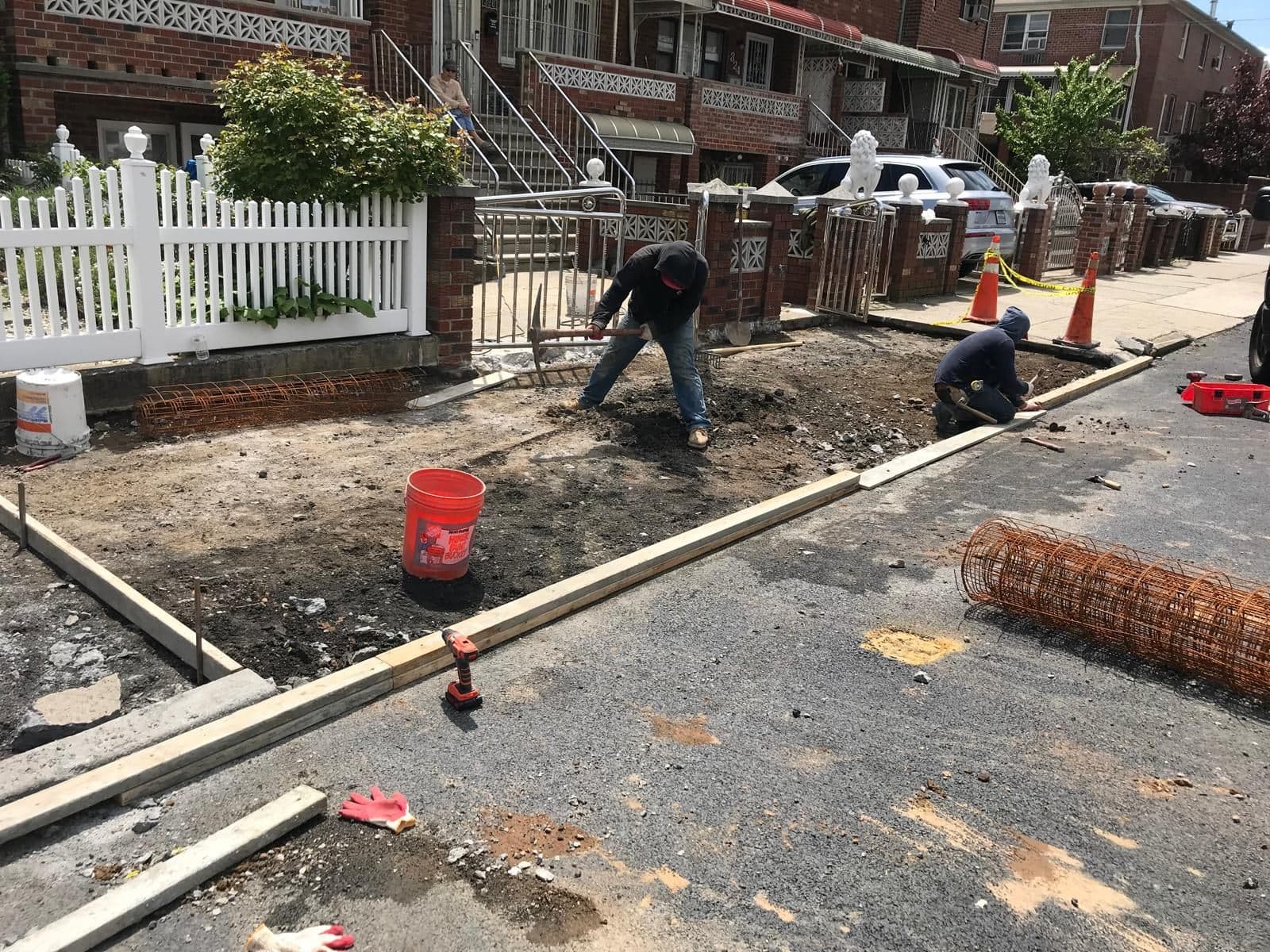
- Remove every defect. Replace the damaged flags and correct the slope and drainage problems listed on the notice.
- Install expansion joints. DOT requires joints at least every 20 linear feet, at each property line, and where the curb meets the sidewalk.
- Book the dismissal inspection. Call 311 with the permit number, property address, block and lot, Notice of Violation number and your contact details. The violation is removed once the inspector confirms the work.
The tree damage exception
The City no longer issues violations or liens for sidewalk damage caused solely by City trees at 1-, 2- and 3-family homes. For buildings with four or more units, commercial properties and vacant lots, tree damage is still the owner's responsibility. Tree-related repairs are coordinated through NYC Parks.
What does it cost?
Cost depends on how many flags need replacing, curb work, access and whether tree roots are involved, so the only reliable number is a written quote after an inspection. See sidewalk repair in Brooklyn to book a free inspection and get your exact price.
This guide is general information, not legal advice. Rules can change; check NYC DOT for the latest.