
- Buildings taller than six stories need a facade inspection every five years under the Facade Inspection & Safety Program (FISP), known as Local Law 11.
- The inspection is done by a Qualified Exterior Wall Inspector, a licensed engineer or architect, who files the report with DOB.
- Every condition is rated Safe, SWARMP or Unsafe. A SWARMP condition left unrepaired becomes Unsafe in the next cycle.
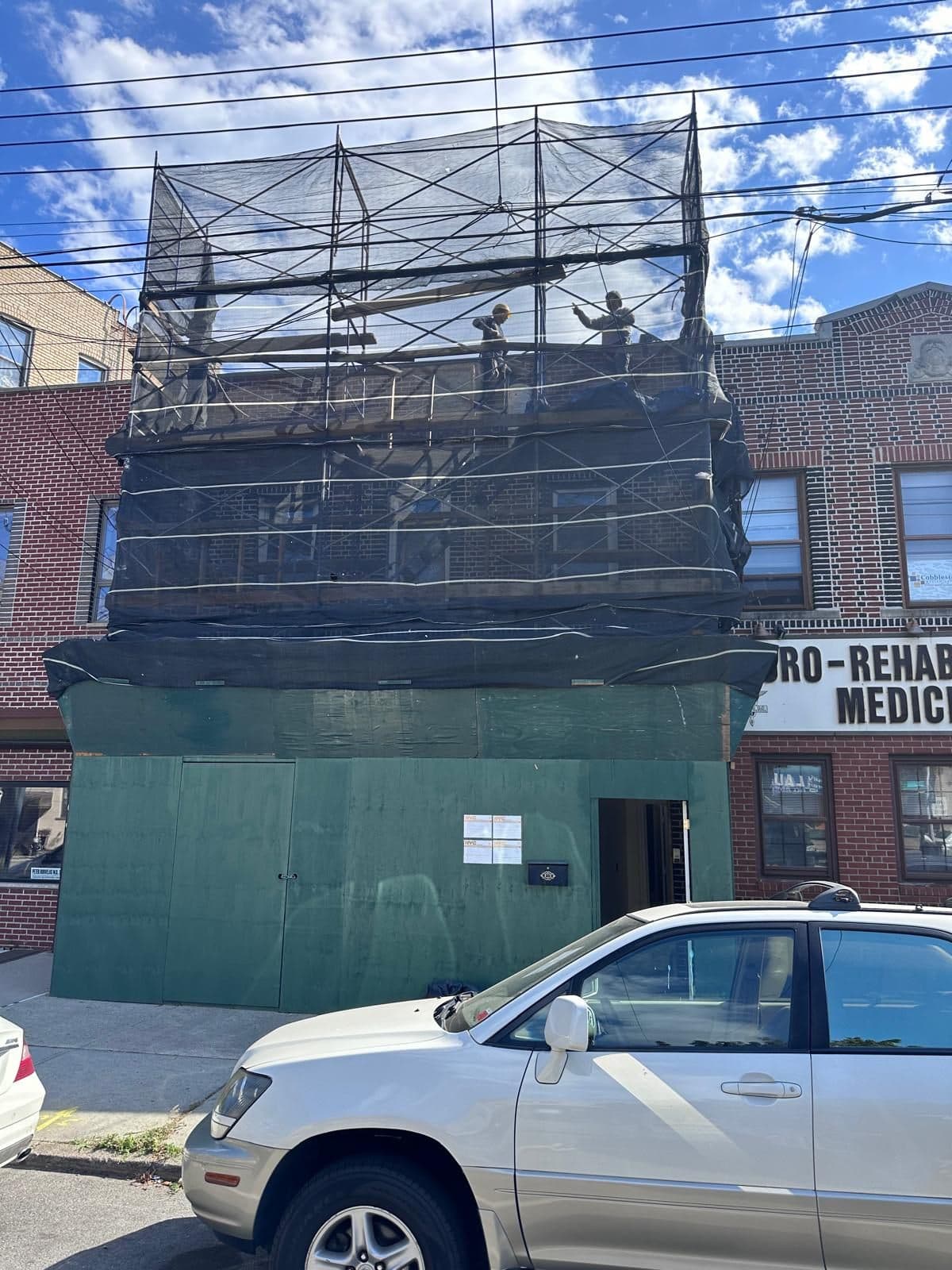
- Unsafe means installing public protection, such as a sidewalk shed, immediately and repairing within 90 days of the report.
What is FISP?
The Facade Inspection & Safety Program is the Department of Buildings program that makes sure building walls don't drop brick, stone or loose parts onto the street. It's still widely called Local Law 11, after the 1998 law that shaped it. Owners of buildings higher than six stories must have the exterior walls and everything attached to them inspected every five years, and file a technical report with DOB.
Does it apply to my building?
It applies to buildings higher than six stories, and DOB puts the responsibility on the owner to confirm whether theirs is covered, with the FISP Universe Map as a reference. Each five-year cycle is split into sub-cycles A, B and C, and the last digit of your block number decides which filing window you fall in.
Who does the inspection?
A Qualified Exterior Wall Inspector (QEWI): a New York State licensed Professional Engineer or Registered Architect with the experience DOB requires. The QEWI inspects the facade and everything attached to it, and files the report electronically through DOB NOW: Safety. A contractor can't sign off a FISP report; the repairs are where contractors come in.
Safe, SWARMP and Unsafe
- Safe. No repair or maintenance needed, and nothing expected to become unsafe in the next five years.
- SWARMP (Safe With A Repair and Maintenance Program). Safe now, but needs repairs within the cycle, in no less than one year, so it doesn't become unsafe. If it isn't fixed by the next inspection, it must be reported as Unsafe.
- Unsafe. Hazardous to people or property. The owner must act immediately (see below).
What to do when the facade is Unsafe
- Install protection immediately. A sidewalk shed, construction fence or structural netting. All of them need DOB permits.
- Repair within 90 days. DOB expects unsafe conditions repaired within 90 days of filing the report. If repairs and the amended report can't be done within 104 days, the owner must request an extension.
- File the amended report. Once every unsafe condition is corrected, the QEWI files an amended report within two weeks.
Penalties for missing deadlines
Late or missing reports, and repairs that aren't done on time, lead to violations and penalties heard at OATH. DOB publishes the current amounts on its FISP fees and penalties page. The longer a sidewalk shed stays up, the more it costs, so the fastest way to save money is usually to schedule the repairs as soon as the report is filed.
The repairs reports usually call for
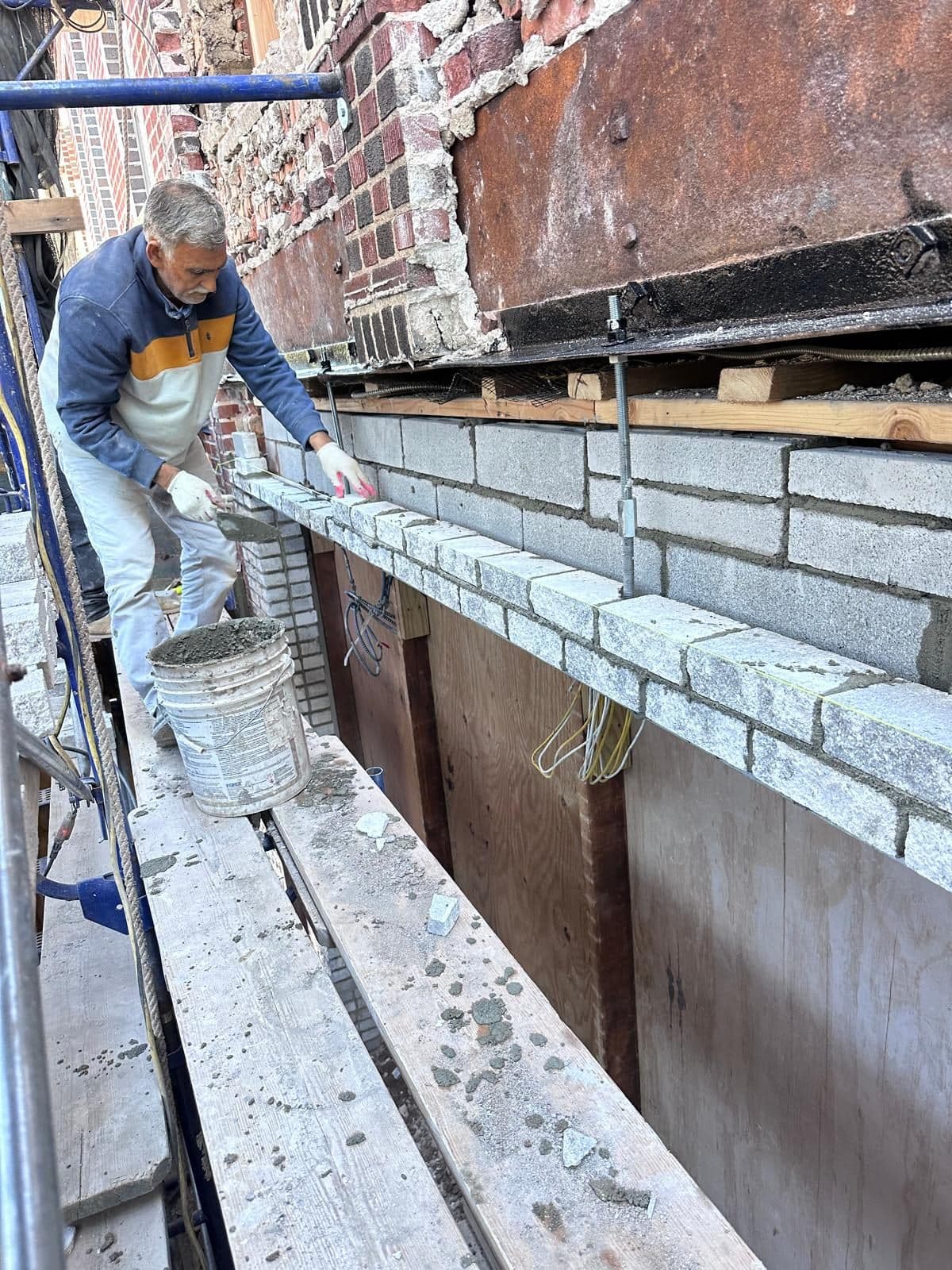
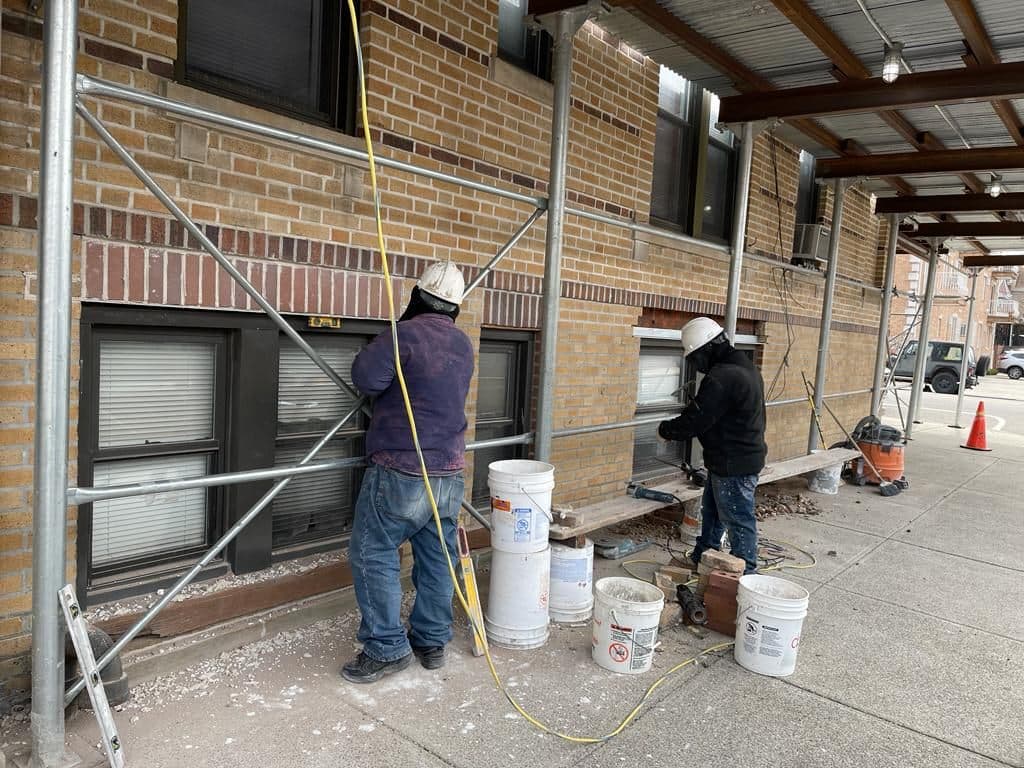
On the brick buildings we work on, FISP reports most often list loose or cracked brick, worn-out mortar joints that need repointing, cracked or rusted window lintels, and damaged parapet walls. Owners of shorter buildings aren't in FISP, but the same problems show up on rowhouses and walk-ups, and they're cheaper to fix early.
We do the masonry repairs a QEWI report calls for, with scaffolding or a sidewalk shed when the job needs one. See our window lintel, parapet pointing and waterproofing job in Brooklyn.
Common questions
Which buildings need a Local Law 11 inspection?
Buildings higher than six stories. DOB makes the owner responsible for confirming whether the building is covered, using its FISP Universe Map.
How often is the facade inspected?
Every five years. Each cycle has three sub-cycles, and the last digit of the building's block number decides the filing window.
What does SWARMP mean?
Safe With A Repair and Maintenance Program: the facade is safe now but needs repairs within the cycle. If it isn't fixed by the next inspection, it must be reported as Unsafe.
How fast must Unsafe conditions be repaired?
Public protection such as a sidewalk shed goes up immediately, and DOB expects the repairs within 90 days of the report, with an extension request if they can't be finished within 104 days.
Can a contractor do the FISP inspection?
No. Only a Qualified Exterior Wall Inspector, a licensed engineer or architect, can inspect and file. A masonry contractor does the repairs the report lists.
This guide is general information, not legal advice. Rules can change; check NYC DOB for the latest.